ShinCraft: Speed Awakens
- 3.2
- Rating
- 10.00M
- Installs
- Free
- Price
 Analysis by App-foxy
ShinCraft: Speed Awakens is a free simulation game from SimulationCraft Studios that caught my attention because it appears to aim for a particular mix: a block-built setting where movement and creativity matter at the same time. That combination can be appealing when you want something more active than a traditional building sandbox, but less demanding than a competitive action game.
After spending time with it, I see the main appeal in the decisions it asks you to make while moving through its world. You are not simply looking at blocky scenery or placing yourself inside a passive construction toy. The experience is built around balancing momentum, exploration, and the urge to shape or understand the environment. That gives it a different personality from many familiar simulation games.
The game is currently free, carries a Teen content rating, and runs on devices using Android 7.0 or later. Its current version is 140216. It has reached more than ten million installs, while its average score sits at 3.2 from roughly ten thousand ratings. Those figures suggest a large audience but also a divided response, which matches my impression: the concept is easy to understand, yet the execution will not suit every player.
You May Also Like

 Blood Strike: 2.5 Anniversary
Blood Strike’s Loadouts Turn Every Drop Into a Tactical Gamble
A close look at Blood Strike’s custom loadouts: how fast access to signature weapons reshapes its battle royale rhythm, rewards preparation, and narrows the gap between fights.

 Pandora - Music & Podcasts
Pandora’s Music Is Easy to Start, but Harder to Recover
Pandora’s strength is its low-effort path from a seed to a station. Its weak spot is how much confidence it asks you to place in connection, setup, and quiet recovery.

 8 Ball Pool
 Is Built on Rivalries, Rematches, and Routine
A close look at the rivalries, rematches, shared routines, and unanswered safety questions that turn a quick pool match into a persistent mobile community.

 Samsung Music
’s Quiet Strength Is Playing What You Already Own
Its reach comes less from spectacle than from dependable access to a personal library. That simplicity is both the app’s strongest retention engine and its ceiling.

 AccuWeather: Weather Radar
AccuWeather Review: A Quick, Clear Forecast for Everyday Decisions
For everyday plans, the best forecast is the one you can understand quickly. AccuWeather makes rain timing, radar, and local conditions easy to act on, with a few trade-offs.

 Hill Climb Racing
Why Hill Climb Racing Still Turns Crashes Into One More Run
A tiny car, a bumpy hill and one more upgrade: Hill Climb Racing keeps resurfacing because its simple chaos makes every near-miss feel personal.
More From Our News Desk



How the world turns movement into a decision
The first thing I noticed is that speed changes how I read the environment. In a slower block-building game, I usually inspect a space, gather an idea, and then decide what to do. Here, movement gives the setting more urgency. I have to think about where I am going, what I might be passing, and whether acting quickly is actually helping me.
That creates a useful decision space even when the basic presentation looks simple. A route that seems direct may be attractive because it saves time, but a wider or less obvious path can be better if it lets me understand the surroundings before committing. I found myself switching between two mental modes: moving with purpose and slowing down enough to plan. The game is most interesting when those modes compete.
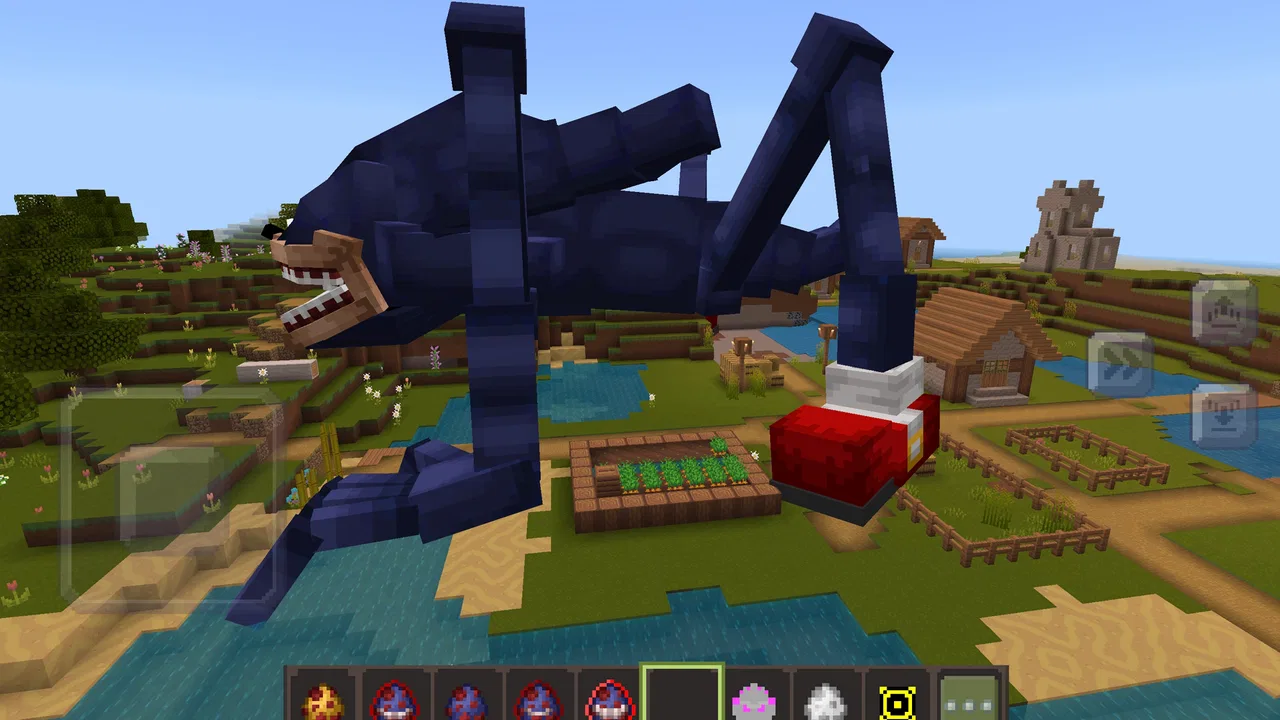
The blocky visual style supports this approach well. Shapes are readable, the world has a clear toy-like identity, and the simplified appearance leaves room for imagination. At the same time, the style can make locations feel less distinct than they might in a more detailed simulation. I sometimes had to rely on my own sense of direction and memory rather than expecting every area to feel strongly recognizable.
That is not necessarily a flaw, but it affects who will enjoy the game. Players who like making their own meaning from a compact, abstract world may find the look charming. Anyone expecting a highly detailed environment with constant visual guidance may find it plain. I would treat the art direction as part of the game’s challenge rather than merely a cosmetic choice.
My most useful approach was to avoid treating every moment of speed as progress. When I rushed through an unfamiliar area, I gained movement but lost awareness. When I paused briefly to examine the layout, I made better decisions afterward. This is one of the game’s less obvious lessons: speed is valuable only when it improves your next choice.
Planning a route instead of simply pushing forward
A practical way to play is to divide each session into short planning horizons. I first decide what I want from the next few minutes, then I reassess after reaching a recognizable point. That keeps the experience from becoming a blur of movement. It also makes the blocky environment easier to understand because I am building a mental map gradually instead of trying to memorize everything at once.
This method works particularly well during a quick break. If I have only a little time, I can focus on one small objective rather than beginning a large construction idea that I will abandon. On a longer session, I can connect several small decisions and see whether my earlier route choices helped or created extra work.
I would not call this a fully open-ended creative tool in the same sense as the biggest sandbox games. Its identity comes from the tension between doing something with the world and moving through it. If your priority is unlimited building freedom, a dedicated construction sandbox will probably offer more room. If you want creativity to exist alongside motion and exploration, this game has a clearer reason to be installed.
Where the risk becomes worthwhile
The reward structure is most enjoyable when I accept a small amount of uncertainty. Taking the safest possible route can keep a session comfortable, but it can also make the game feel repetitive. Choosing a less familiar direction creates the possibility of discovering a more interesting area or finding a better way forward, while also increasing the chance that I will need to retrace my steps.
I like that this risk is mainly mental rather than dependent on complicated rules. I am weighing time, attention, and confidence. Do I continue because the route looks promising, or do I return while I still understand where I came from? That question gives the game more depth than its simple visual style initially suggests.
There is a trade-off here for mobile players. A game that asks me to make route decisions can be absorbing, but it is less relaxing than a purely decorative building experience. If I want something I can play while barely paying attention, ShinCraft is not always the best choice. It rewards a little focus, and its appeal decreases when I treat it as background entertainment.
For an everyday example, I can imagine opening it after work with the intention of playing for a short while. I might begin by moving through a familiar section, then use the remaining time to test one unfamiliar direction. That is a sensible session because it separates reliable progress from experimentation. If the experiment becomes confusing, I still have a known route to return to instead of feeling that the whole session was wasted.
That habit also helps with frustration. Rather than judging a session only by how far I traveled, I can judge it by whether I learned something about the environment or improved my next decision. In a simulation game with a creative layer, that kind of progress is easy to overlook. I found it more satisfying once I stopped expecting every session to produce a dramatic result.
Adapting when the first plan stops working
The game benefits from flexible thinking. A route that looks efficient at the beginning may become awkward once I understand its layout. A creative idea may also need to change when the surrounding space does not support it. I had better results when I treated my first plan as a starting point rather than a promise.
This is where the game’s combination of speed and creativity becomes meaningful. Movement gives me information, while creativity gives me a reason to care about that information. I am not only asking, “How do I get there?” I am also asking, “What can I do with what I find?” Those questions reinforce each other, but they can also pull in opposite directions.
When I focused too heavily on speed, I overlooked opportunities to make the environment feel personal. When I focused too heavily on shaping ideas, I lost the sense of momentum that makes the game distinct. The best balance depends on my mood. Some sessions are better for exploration; others are better for slowly working through a creative thought.
A useful adjustment is to change the goal before changing the route. If a path becomes frustrating, I do not immediately assume that I need to move faster or search harder. I ask whether I am pursuing the right kind of progress. Maybe I need to understand the area first, or perhaps I should set a smaller creative target. This sounds simple, but it prevents the common mobile-game habit of repeating the same action without learning from it.
Players who enjoy adapting will probably get more from ShinCraft than players who want a fixed sequence of clearly signposted tasks. The game’s appeal is not only in reaching an endpoint. It is in deciding how much certainty to demand before moving on. That makes it approachable, but it also means the experience can feel directionless if I need constant instructions.
What remains interesting after the first sessions
The long-term question is whether the blend of movement and creativity can hold attention beyond the initial curiosity. In my view, the answer depends heavily on how much personal structure I bring to the game. It has enough of a central idea to encourage repeat visits, but players who need a strong stream of new objectives may find the experience less compelling over time.
I see three useful planning horizons. In the immediate horizon, I choose a direction and manage my movement. Over a longer session, I compare routes and decide whether exploration or creativity deserves more attention. Across several sessions, I can develop a preferred way of playing: cautious mapping, fast traversal, or a more imaginative approach to the blocky setting.
That layered planning is one of the game’s strongest qualities. It does not force every choice into a single definition of success. I can value efficiency, discovery, or expression, and each changes how I interpret the same world. The weakness is that the game may not always communicate these possibilities strongly enough. A new player can easily move around without realizing that their own planning style is part of the experience.
I recommend giving it a fair trial with a specific personal rule. For example, I might spend one session learning the environment, another testing faster routes, and a third concentrating on creative decisions. This makes it easier to tell whether the game has lasting appeal for me. Simply repeating the same undirected movement can make it seem shallower than it is.
The rating of 3.2 reflects why expectations matter. I would not install this expecting a polished replacement for every established block-building or simulation game. Instead, I would approach it as a free experiment built around the meeting point between speed and creativity. That framing makes its rough edges easier to accept, while still leaving room to decide that another game fits better.
Who should play, and who should look elsewhere
I think ShinCraft is a good match for players who enjoy block-based worlds but want more movement and decision-making than a quiet construction sandbox provides. It may also suit people who like short mobile sessions with enough freedom to create their own objectives. The Teen rating is worth keeping in mind for families choosing games, especially when deciding whether the tone and play style suit a younger player.
I would be more cautious about recommending it to someone who wants a deep management simulation, a carefully guided story, or a highly competitive experience. The game’s appeal is broader and more exploratory. It is also not my first choice for someone who dislikes trial and error. Some of its satisfaction comes from adjusting a plan after learning that the obvious approach was not the most interesting one.
Compared with a conventional block-building game, this one places more emphasis on momentum and route awareness. Compared with a traditional simulation title, it offers a looser and more imaginative environment rather than a dense system of management decisions. Compared with a fast action game, it asks for less reflex-driven intensity and more personal planning. Those comparisons explain both its niche and its limitations.
Device compatibility is fairly broad because it supports Android 7.0 and later, but compatibility alone does not guarantee that every player will have the same experience. The game’s value comes from how its movement, world layout, and creative possibilities feel together on a particular device. I would begin with short sessions rather than committing immediately to it as a main game.
It is also worth remembering that free access lowers the barrier to trying it, not the need to evaluate it honestly. I appreciate being able to test the central idea without paying first, but the free format does not automatically make every weakness unimportant. If the controls, pacing, or sense of direction do not click with me early on, I would move on rather than forcing myself to like the concept.
My strategy verdict after living with the trade-offs
SimulationCraft Studios has created a game with a recognizable point of difference. ShinCraft is not interesting simply because it uses blocks. It is interesting because it asks me to decide when to move quickly, when to observe, and when to turn a discovered space into something more personal. That decision-making gives the experience a modest but genuine strategic layer.
My strongest recommendation is to play deliberately. Set a small goal, learn one area, and treat unexpected detours as information rather than failure. If I rush without a plan, the game can feel empty. If I give every decision a little context, the relationship between speed and creativity becomes much clearer.
The limitations are just as important. The world may feel too abstract for players who want rich environmental detail, and the open-ended structure may not provide enough direction for people who prefer explicit missions. Its average reception also suggests that the central idea will not connect equally with everyone. I would choose a more established alternative when I want a deeper building system, stronger guidance, or a more predictable long-term progression.
Still, I can recommend trying it to a friend who enjoys experimenting with unusual mobile simulations. The download is free, the concept is easy to grasp, and the game offers enough room for personal approaches to make short sessions worthwhile. Its real strength is not unlimited content, but the way it turns movement into a series of small strategic choices.
My final view is cautiously positive. I would not present ShinCraft: Speed Awakens as the definitive block-world simulation, but I would describe it as a distinctive option for players who want a more active relationship with a creative environment. Give it a few focused sessions, use a clear objective each time, and pay attention to whether planning your route feels rewarding. If it does, the game has a pleasant niche; if it does not, a dedicated sandbox or more structured simulation will likely serve you better.
FAQs for ShinCraft: Speed Awakens
01What is ShinCraft: Speed Awakens about?
ShinCraft: Speed Awakens is a mobile game that combines fast-paced action, character progression, and fantasy-inspired gameplay. Players generally build a team, improve their heroes, complete missions, and take part in battles that become more demanding over time. Before downloading, remember that the exact content, available characters, and progression systems may vary depending on the game version and region.
02Is ShinCraft: Speed Awakens free to download and play?
The game can typically be downloaded without an upfront purchase, allowing players to try its main features at no initial cost. However, free-to-play games may include optional in-app purchases for resources, characters, boosts, cosmetic items, or faster progression. It is a good idea to review the store listing and configure parental or purchase restrictions if multiple people use the same device.
03Does ShinCraft: Speed Awakens require an internet connection?
An active internet connection may be required for important features such as account access, downloading additional game data, synchronizing progress, receiving updates, and participating in online events or competitive modes. Even if some sections appear playable offline, you should not assume the entire game works without connectivity. A stable Wi-Fi connection is recommended during installation and major updates.
04Is ShinCraft: Speed Awakens suitable for all ages?
The appropriate age rating should be checked on the Google Play Store or Apple App Store before installation, since ratings can differ by platform and country. Consider the presence of fantasy combat, advertisements, online interactions, and optional purchases when deciding whether the game is suitable for a younger player. Parents should also review privacy settings and enable purchase controls where necessary.
05What should I check before installing ShinCraft: Speed Awakens?
Before downloading, verify that your Android or iOS device meets the current requirements and has enough free storage for the initial installation and future updates. Also check the latest version’s permissions, developer information, privacy policy, connection requirements, and user reviews. If the game supports cloud saving or account linking, confirm how progress is stored so it is not lost after changing devices.
Pros
- Fast-paced races make short play sessions easy to enjoy.
- Anime-inspired visuals give the game a distinctive style.
- Multiple cars and upgrades add variety to progression.
- Simple controls are accessible for casual players.
- Competitive events can encourage regular play.
Cons
- Progress may feel repetitive after mastering the main tracks.
- Some upgrades or vehicles may require considerable grinding.
- Online features depend on a stable internet connection.
- Small screens can make precise steering more difficult.
- Frequent racing may drain battery on older devices.

ShinCraft: Speed Awakens
Gallery